QA automation that ends in evidence.
Quantum QA generates customer-owned automation frameworks and deterministic Test Packs, then turns CI runs into release evidence for SDETs, QA leads, and stakeholders.
Quantum QA turns automation work into operational evidence.
The value is not only generated test code. It is the repeatable proof path your QA team, engineering leaders, auditors, and stakeholders can understand after every run.
Evidence a reviewer can follow
Each CI run can point to Slack or Teams, Allure, Xray, k6 summaries, GitHub Actions, and Quantum QA receipts so proof does not disappear into a console log.
From test intent to execution
Guided packs preserve readable Given/When/Then steps, tags, file paths, and Xray-ready identifiers so managers can connect work to release evidence.
Know whether the framework is ready
Framework Operational Posture shows coverage scope, execution readiness, reporting visibility, and delivery traceability before a team claims readiness.
A dashboard for the release conversation
Release Confidence and run history make pass rate, defects, evidence completeness, and capability coverage visible outside the IDE.
The demo is not a slideshow. It is the workflow customers run.
Quantum QA shows the journey a QA leader, engineering manager, or regulated reviewer cares about: generate the pack, run it in CI, send evidence to stakeholders, and keep the release record readable.
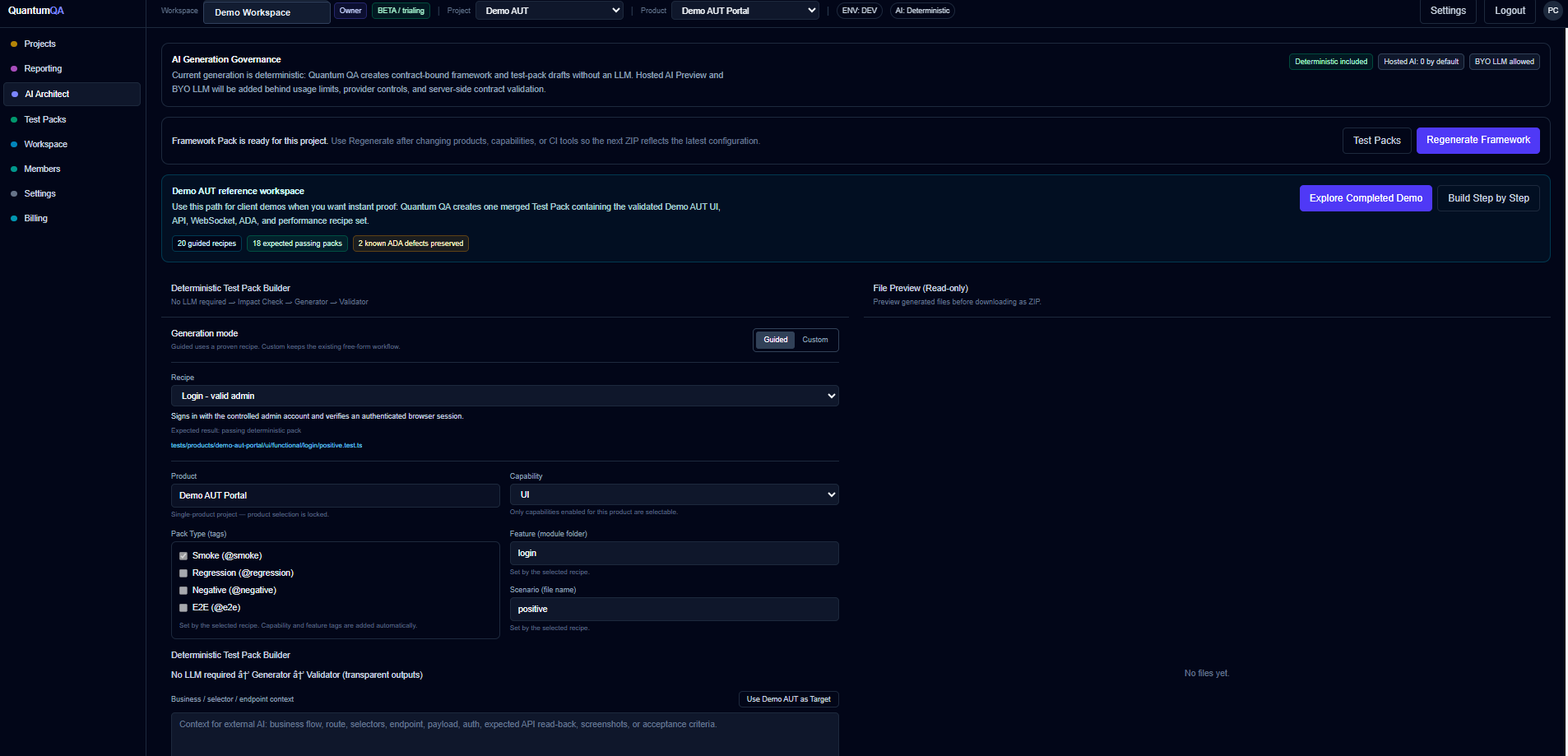
Guided recipes show the exact capability, feature, scenario, tags, and generated file path before the customer confirms the pack.
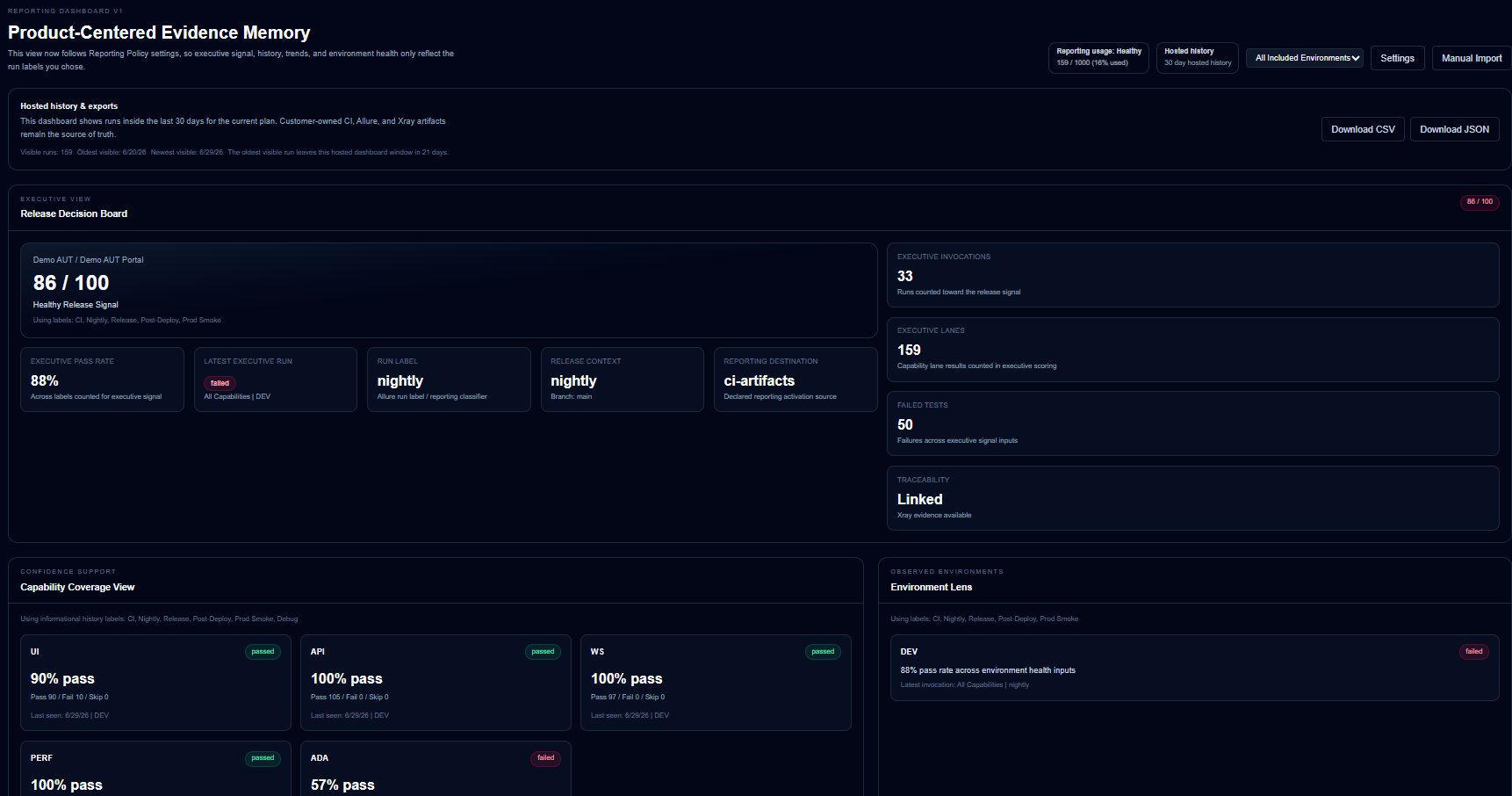
Managers can review capability coverage, environment health, release confidence, and evidence history without reading terminal output.
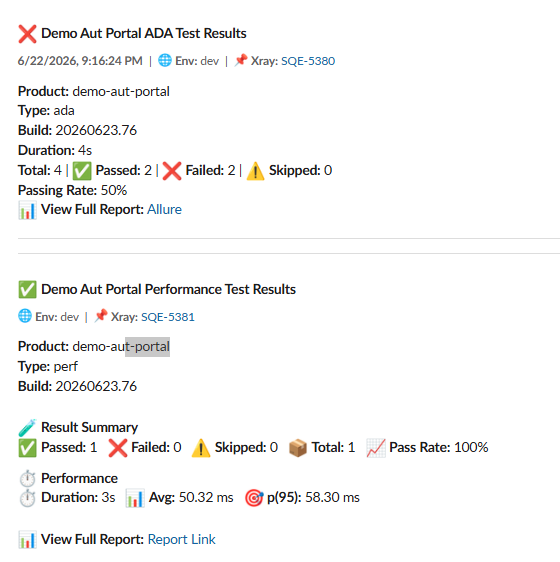
Slack and Teams summaries surface pass rate, Allure links, Xray execution links, and the lane-level result that stakeholders actually read.
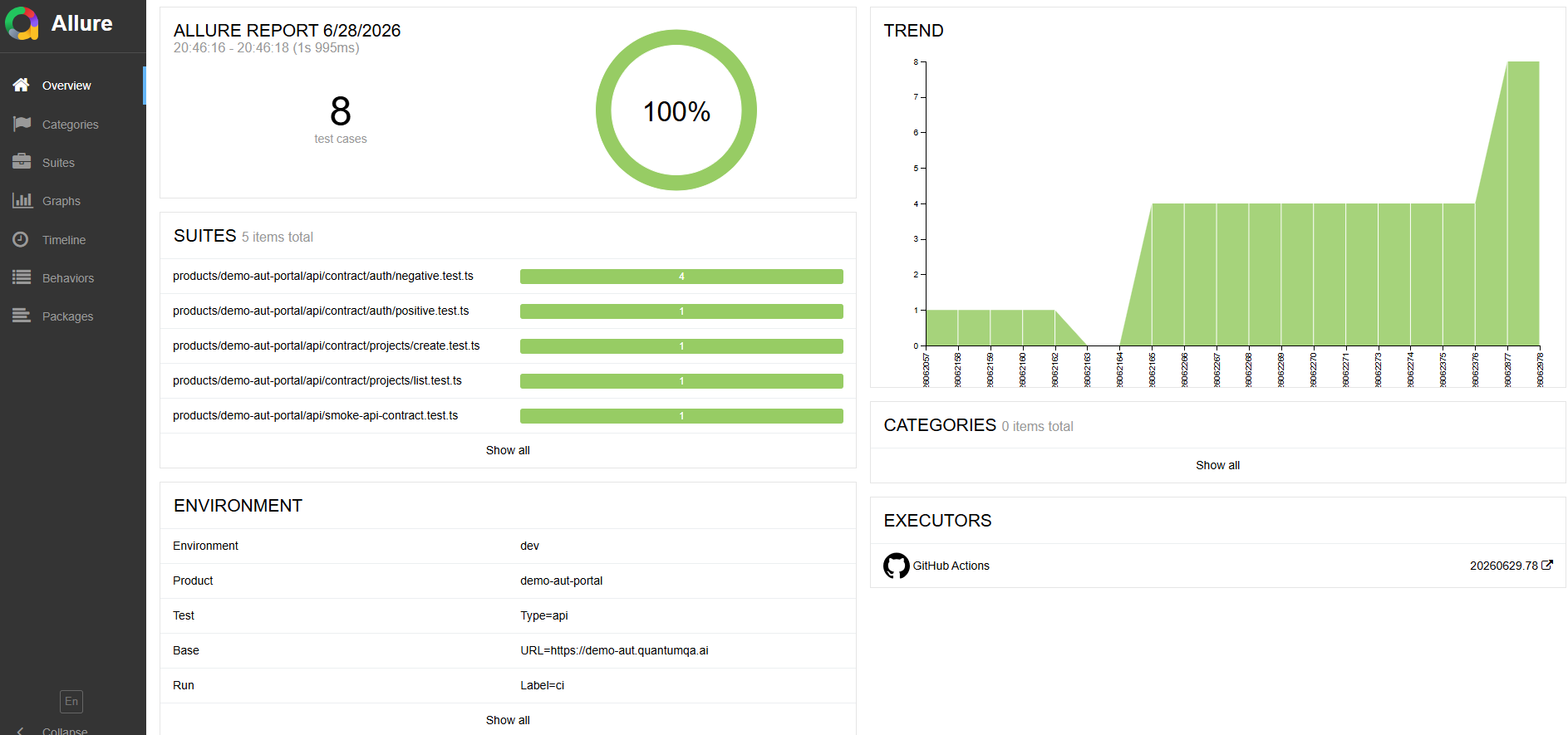
Allure reports preserve readable steps, attachments, request and response evidence, schema checks, and Xray-ready test case identifiers.
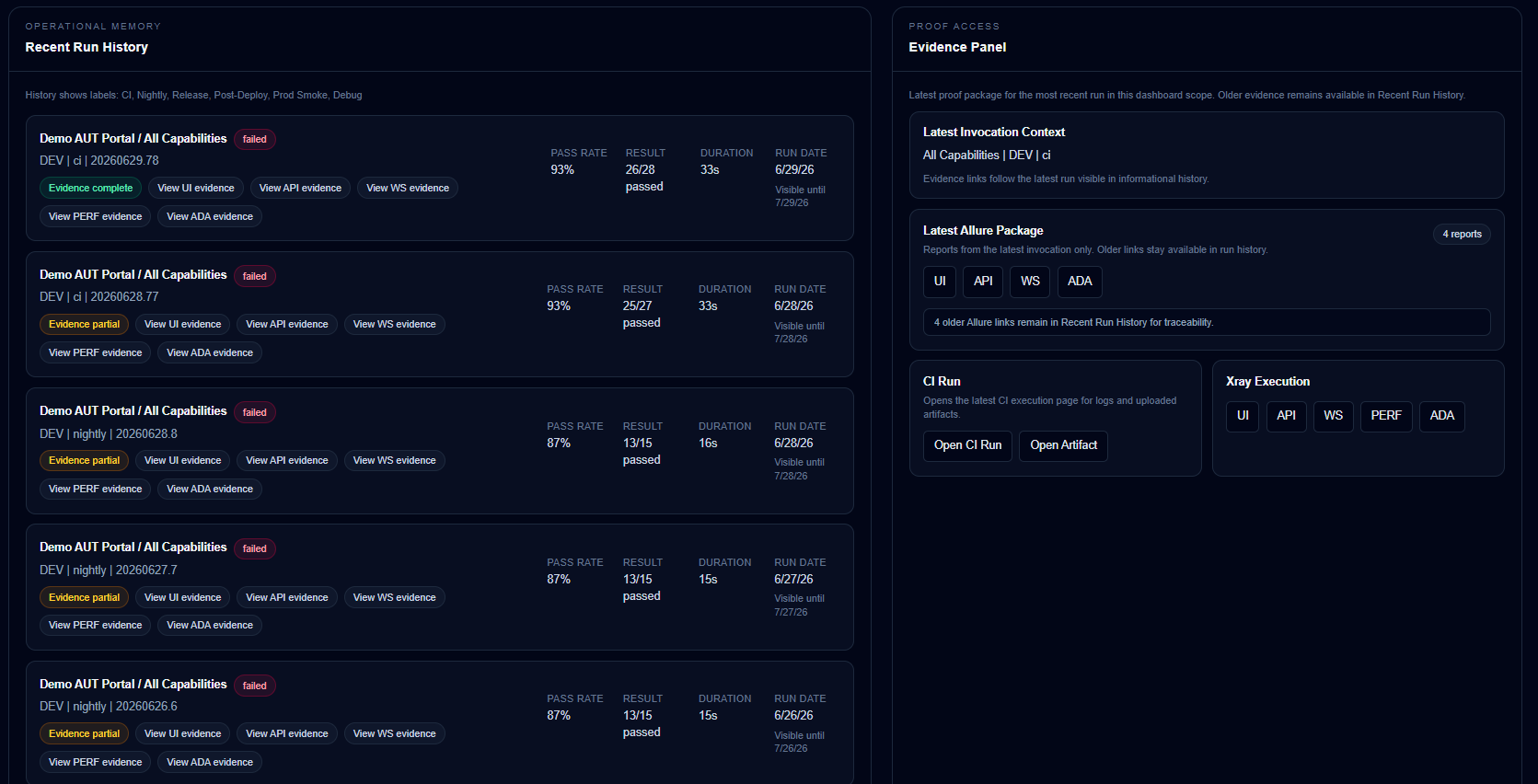
Quantum QA keeps a hosted receipt of what ran, where it ran, what it proved, and where the customer-owned artifacts live.
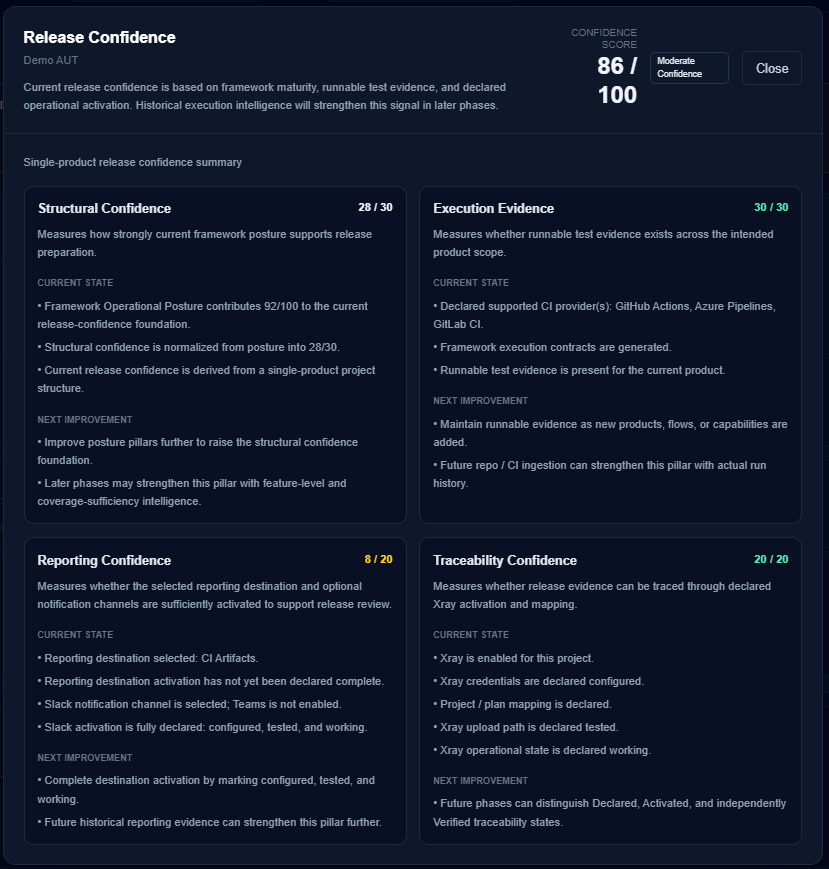
Release Confidence turns framework maturity, runnable evidence, reporting readiness, and Xray traceability into a release signal leaders can discuss.
Built to answer the question leadership actually asks.
After 16 years in QA work, the hard question is rarely "can we write more tests?" It is "are we confident enough to ship, and why?" Quantum QA is designed around that decision point.
Quantum QA is the QA decision system the founder wanted across manual testing, automation engineering, QA leadership, and release conversations: structured frameworks, measurable coverage, clear evidence, and confidence signals managers can use.
Valid evidence checks the product contract: UI state, API payloads, schemas, roles, errors, and the business outcome the test claims to cover.
Reliable automation is deterministic, CI-runnable, readable in reports, and stable enough that leaders can use the result without second-guessing the run.
Coverage shows the selected capabilities, scenarios, positive paths, negative paths, known gaps, and product areas still outside the proof set.
Risk turns failures, skipped areas, ADA findings, contract gaps, latency thresholds, and missing evidence into an honest release conversation.
The gap between generated tests and trusted release evidence.
For SDETs
Generate a maintainable framework with fixtures, schemas, helpers, CI, reporting receipts, and non-destructive regeneration.
For QA Leads
Turn every run into evidence your team can review: what ran, what passed, what failed, and which reports prove it.
For Stakeholders
See release confidence from CI evidence instead of waiting for someone to translate console logs after the fact.
Not just more tests. Better reasons to trust the release signal.
Quantum QA's direction is governed QA release intelligence: every generated asset should explain whether the test is valid, whether the result is reliable, what coverage it adds, and what risk remains for the release decision.
Positive and negative coverage
Generated packs include successful paths, rejected credentials, invalid tokens, and mutation-style checks where useful.
Boundary and contract thinking
API packs validate status, schemas, mandatory fields, payload shape, sanitized evidence, and expected error behavior.
Role and state evidence
UI tests that change backend state verify API responses or read back persisted state instead of trusting only the browser.
Non-happy-path honesty
Accessibility checks are allowed to fail when axe finds real product defects, preserving credibility with stakeholders.
Built around proof, not prompt theater.
Hosted and BYO AI will arrive behind usage limits and contract validation. The current value is already real: deterministic generation, customer-owned code, CI execution, and evidence that a manager can read without opening an IDE.
Downloadable, reviewable, editable framework assets.
Generated files stay inside the selected product and capability.
Framework regeneration preserves customer work.
Allure, Xray, Slack/Teams, k6, and Quantum QA receipts.
Ready to see the Demo AUT proof path?
We can walk through generation, ZIP download, GitHub Actions, Slack/Xray links, Allure, and performance evidence.